Lower Elementary
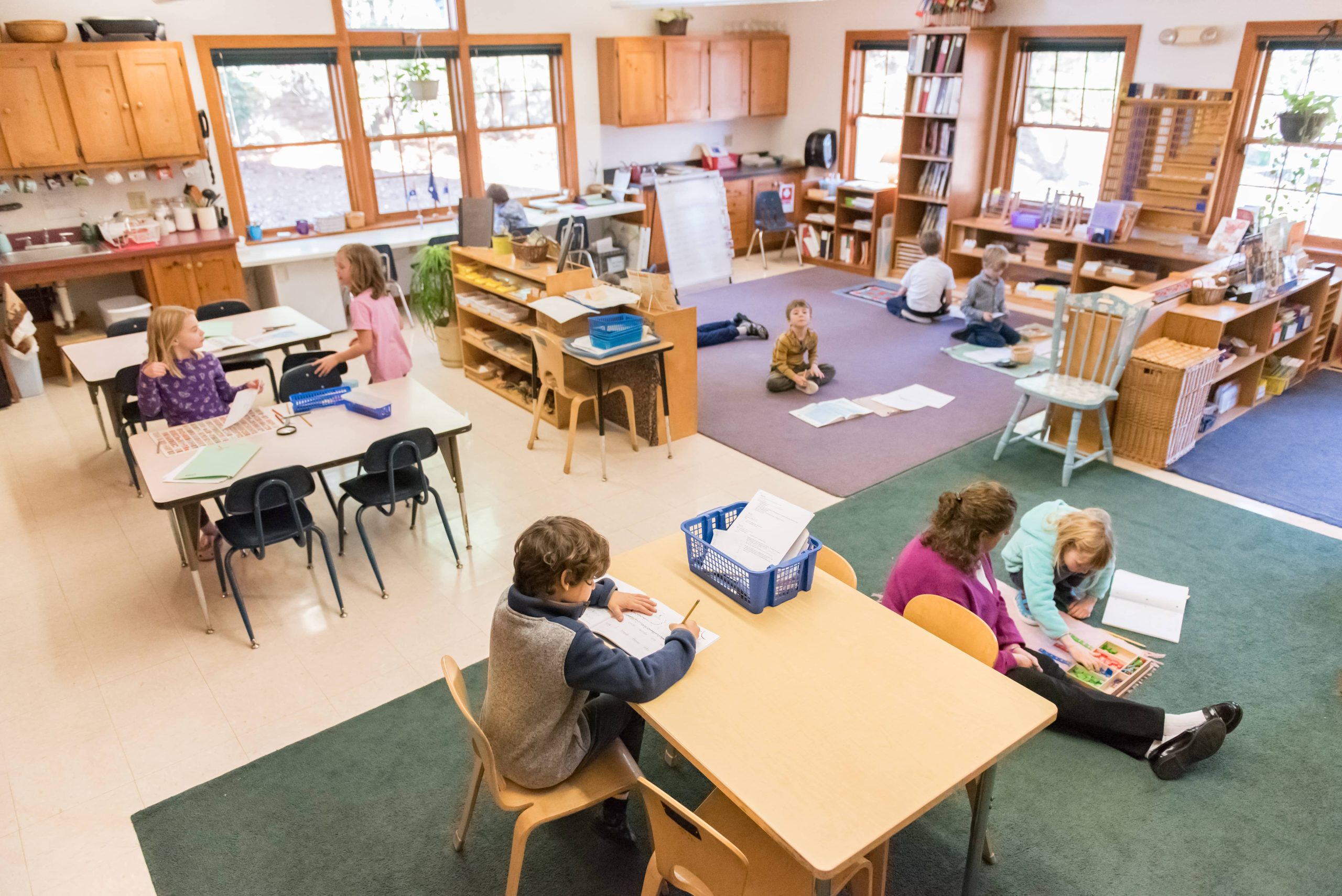
The Montessori School of Northampton ower elementary programs (grades 1-3) fall within what Dr. Montessori called the “Second Plane of Development” (ages 6-12). A student entering the Second Plane of Development is beginning to see the interconnectedness of all things. The Montessori materials and curriculum, along with a respectful and individualized learning environment, support the student’s desire to learn about their world.
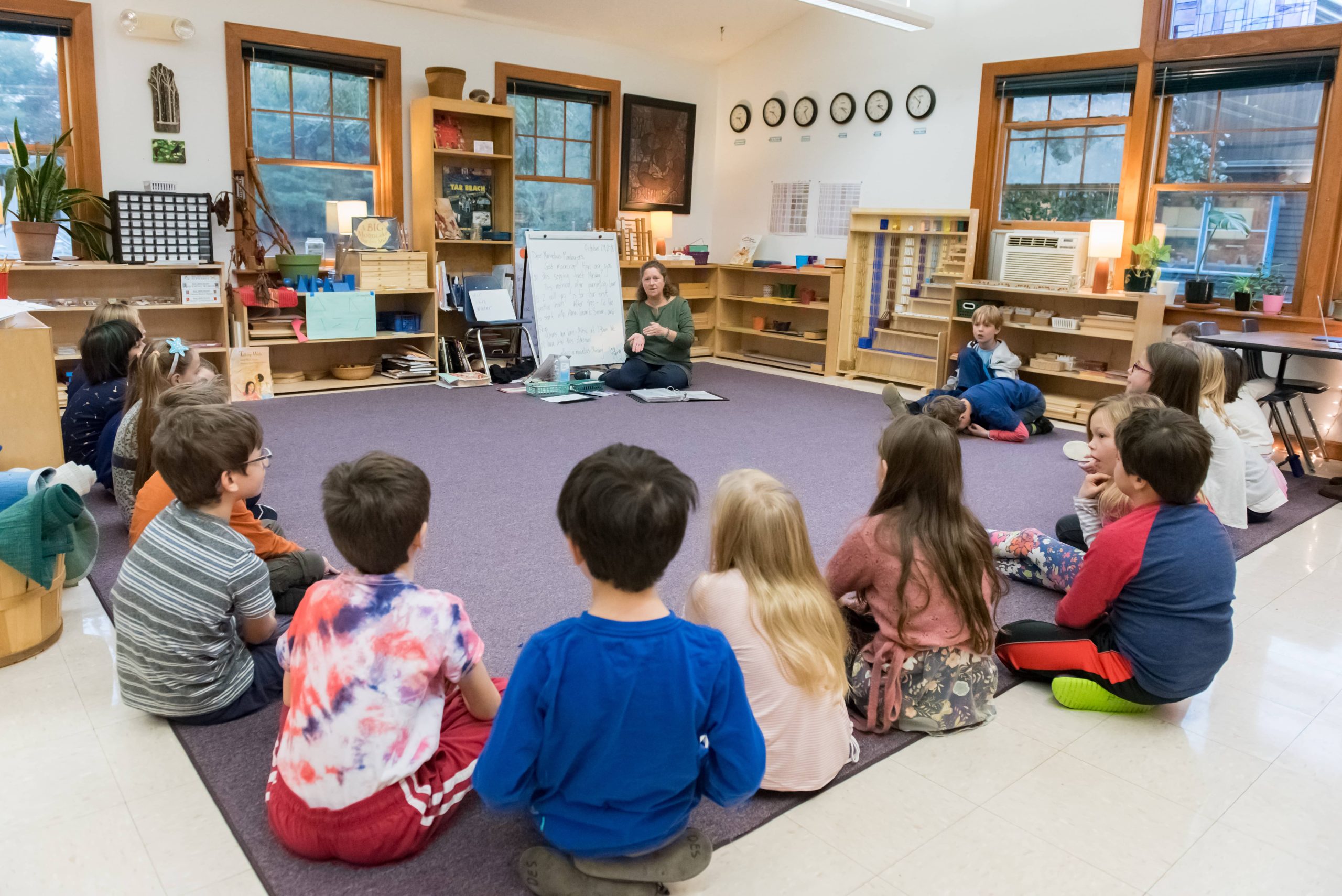
Montessori Lower Elementary (6-9 year old) students are given individual-, small-, and large-group lessons. Students are given the freedom to choose how they wish to accomplish the assigned follow-up work. This helps them begin to develop independence, self-discipline, and time management skills with as much or as little support as needed from their teachers.
AVAILABILITY
Monday – Friday
Ages 6-9
To ensure our reply doesn’t get caught in your spam folder, whitelist the domain northamptonmontessori.org.
Socialization
The Great Lessons
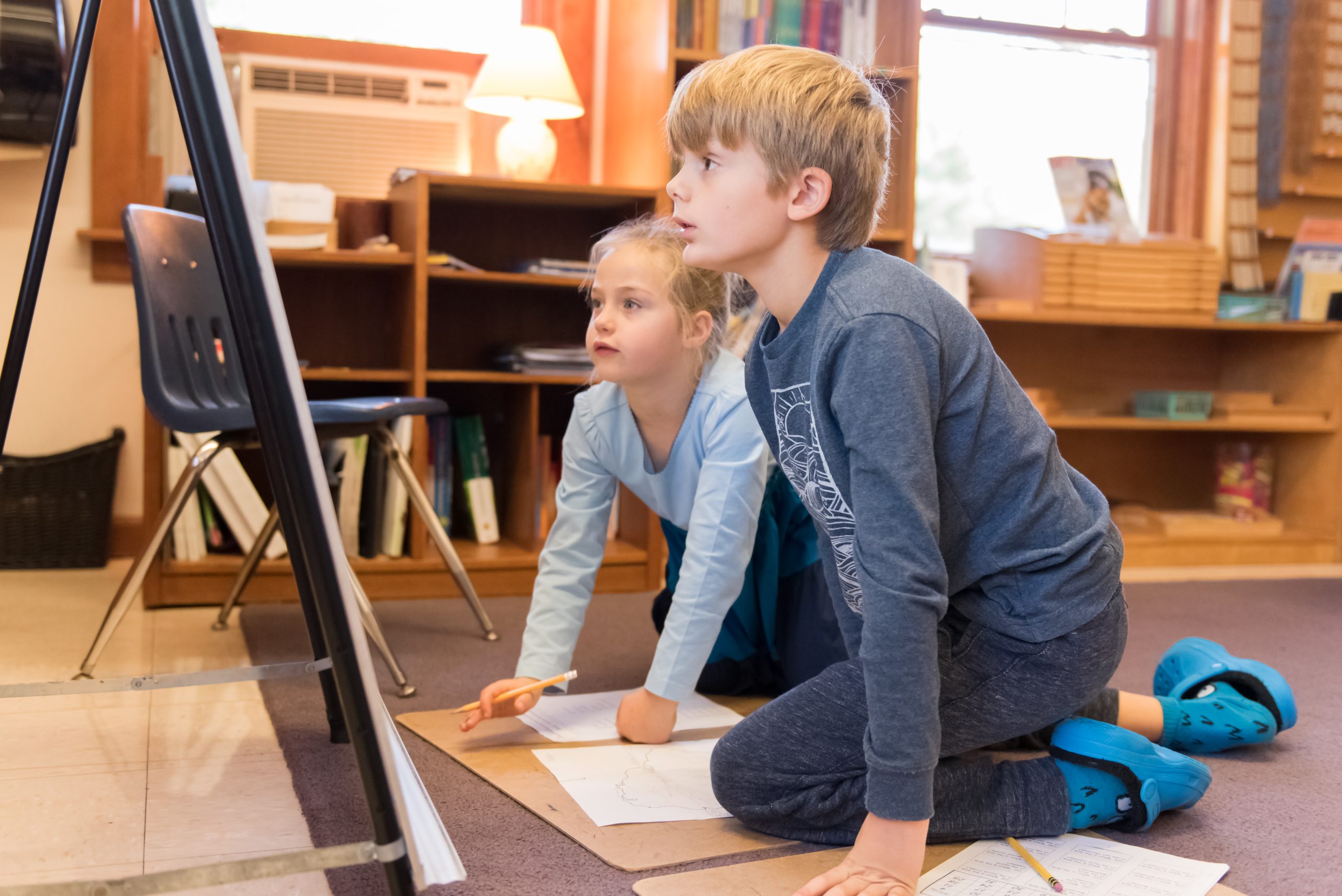
The Montessori School of Northampton elementary curriculum uses connected stories use timelines, experiments, artifacts, and research to tell the story of the earth, human and animal life, and early civilizations. The goal is to arouse the children’s interest, capture their imagination, and awaken their curiosity.
- The Creation of the Universe
- The Coming of Life
- The Coming of Human Beings
- The Story of Writing
- The Story of Numerals
Study of Civilizations
Mathematics
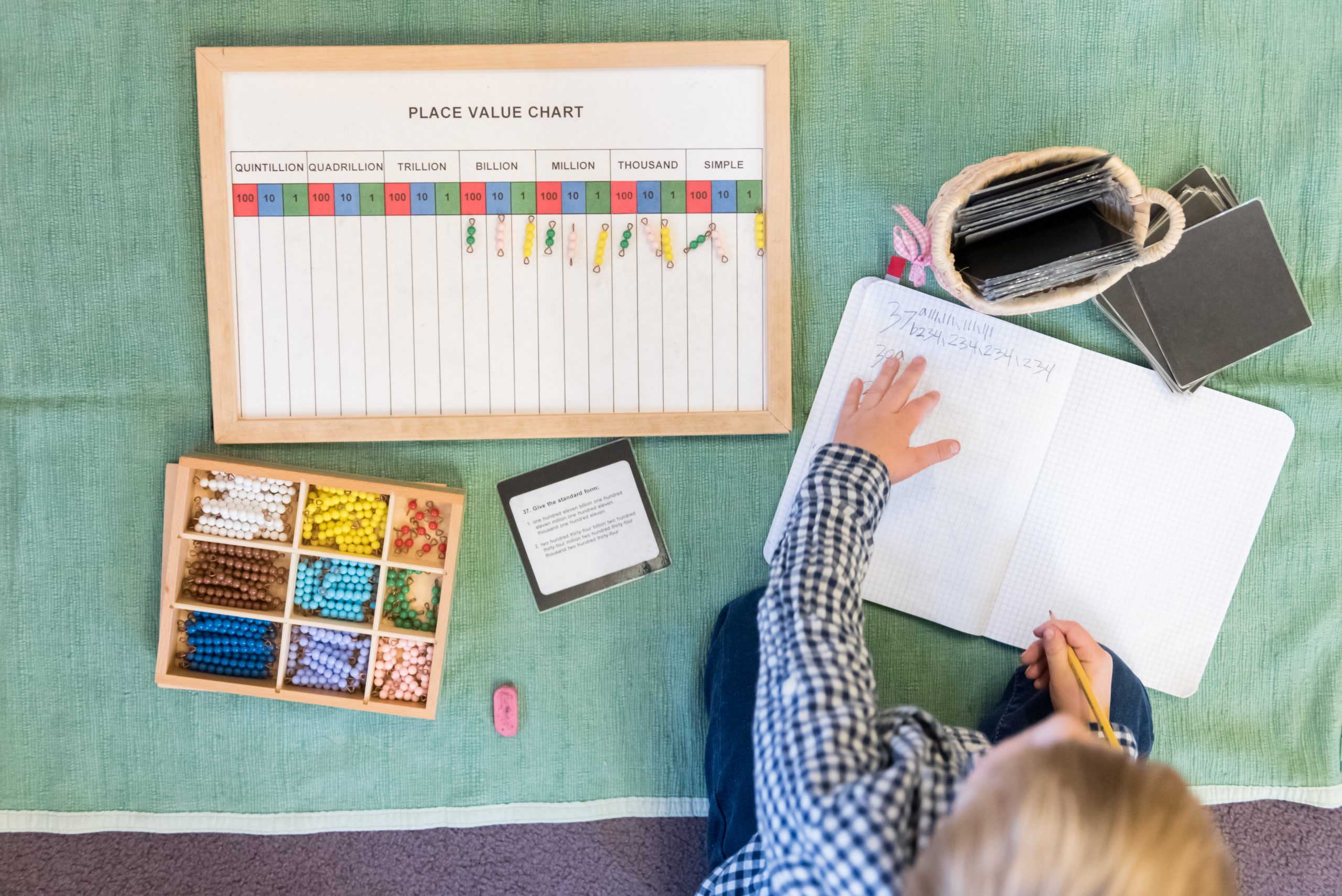
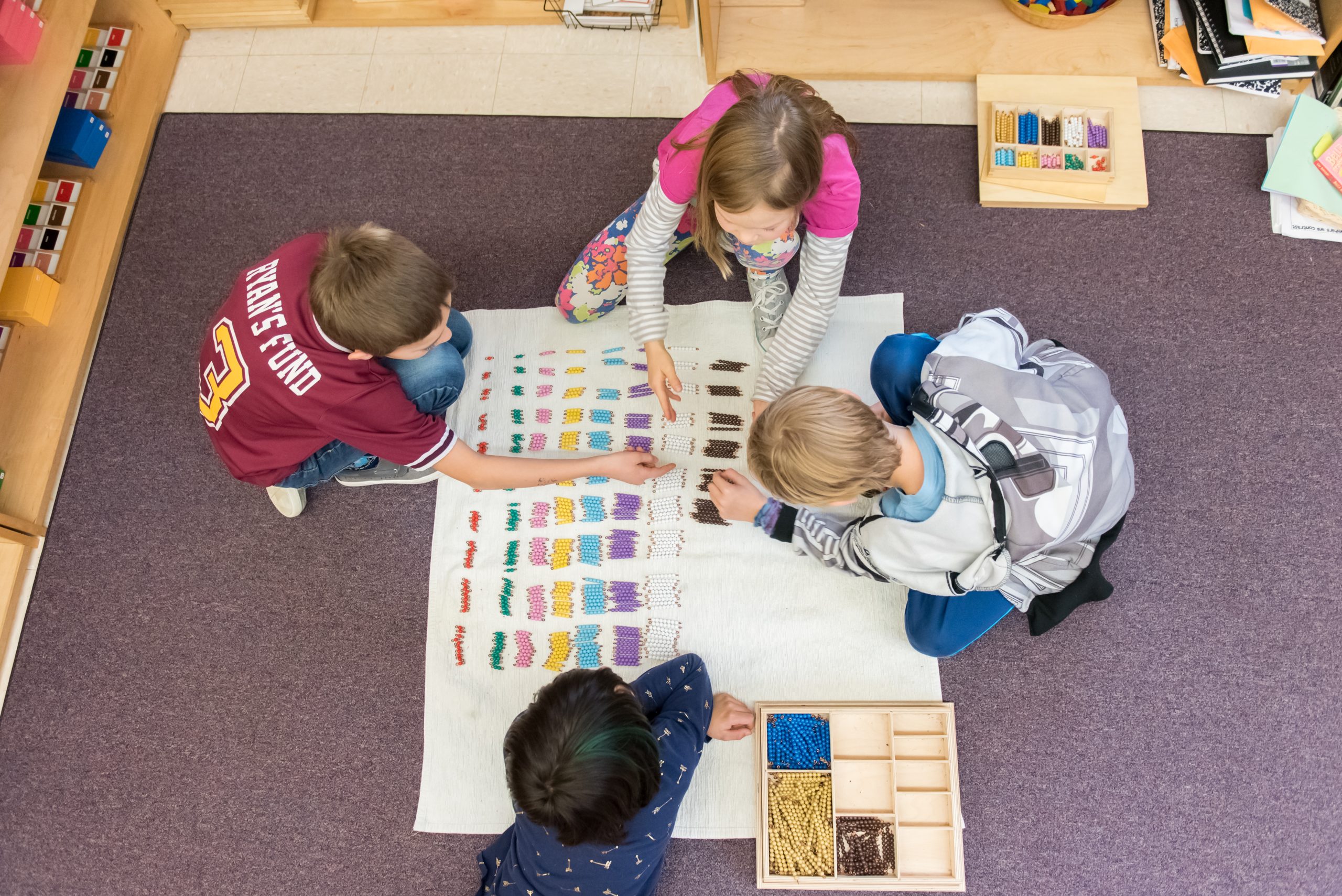
As children move through the math curriculum strands, the work becomes increasingly more complex and the expectation is that by the time students are ready to move into the next class level, they will be on the cusp of being able to do math abstractly.
As with all of the Montessori curriculum areas, a hands-on approach is used which includes the manipulation of geometric figures and materials as well as the learning of Geometry nomenclature.
Reading, Writing, and Research
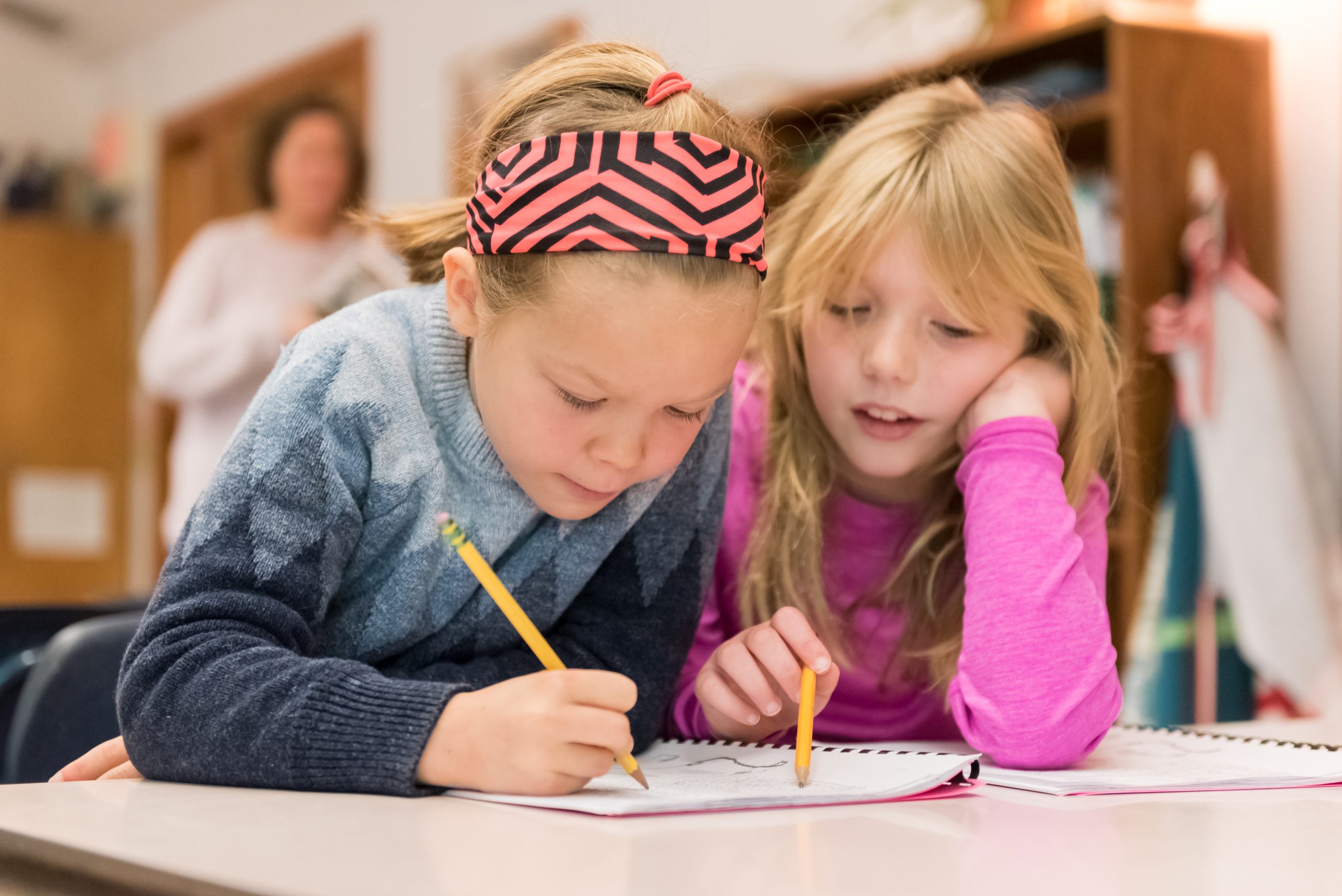
Montessori Lower Elementary students are taught the skills they need to read, write, and research so that they have the tools with which to explore their world.
Readers’ and Writers’ Workshop lessons include decoding/encoding words; reading comprehension; capitalization and punctuation; story elements; genre studies; poetry; and literary devices such as foreshadowing, flashback, and parody.
Individual and small-group research projects and presentations are another way for children to develop reading and writing skills, learn to analyze text, and gain experience in public speaking.
Geography and Culture
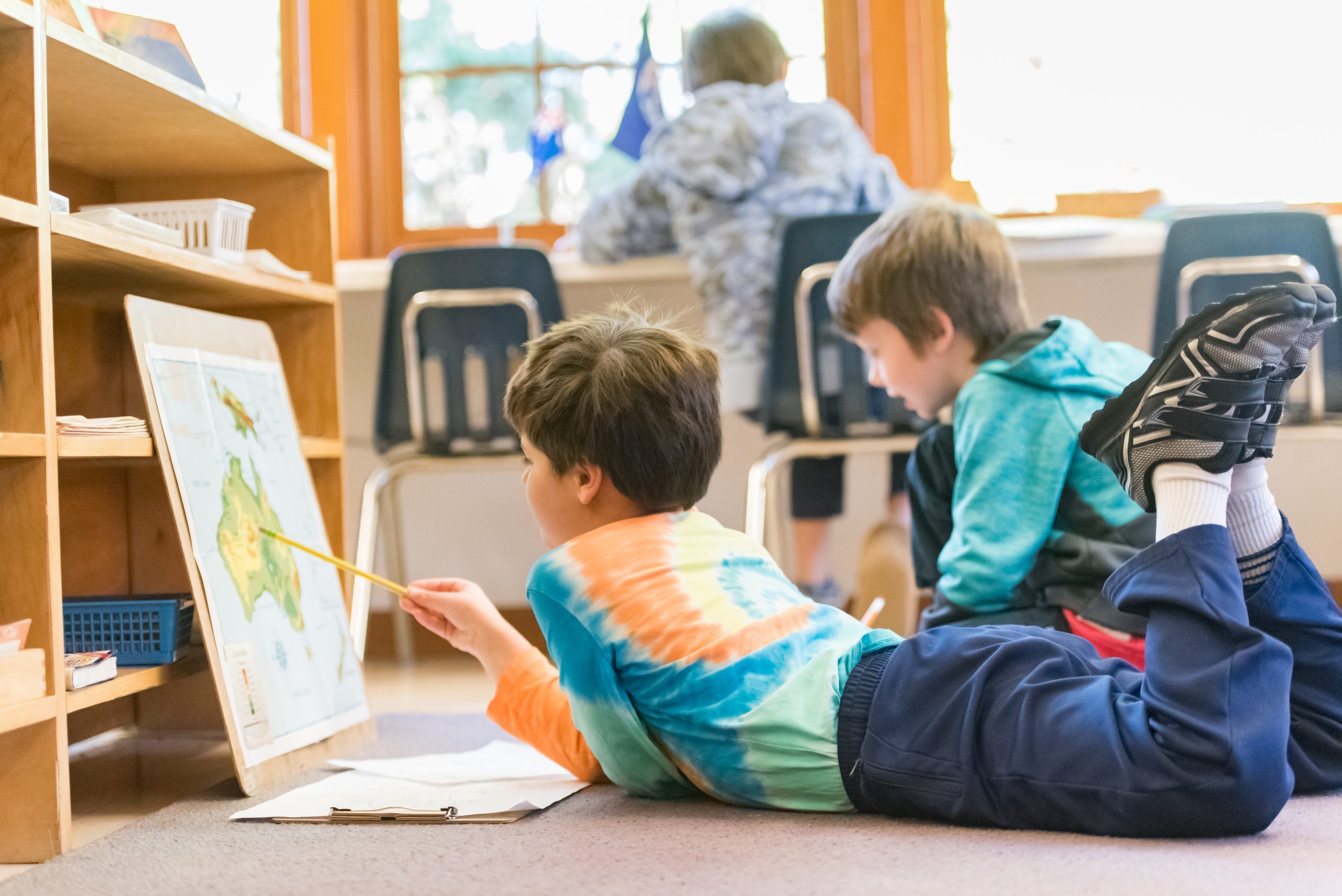
Science, Zoology, and Botany Studies
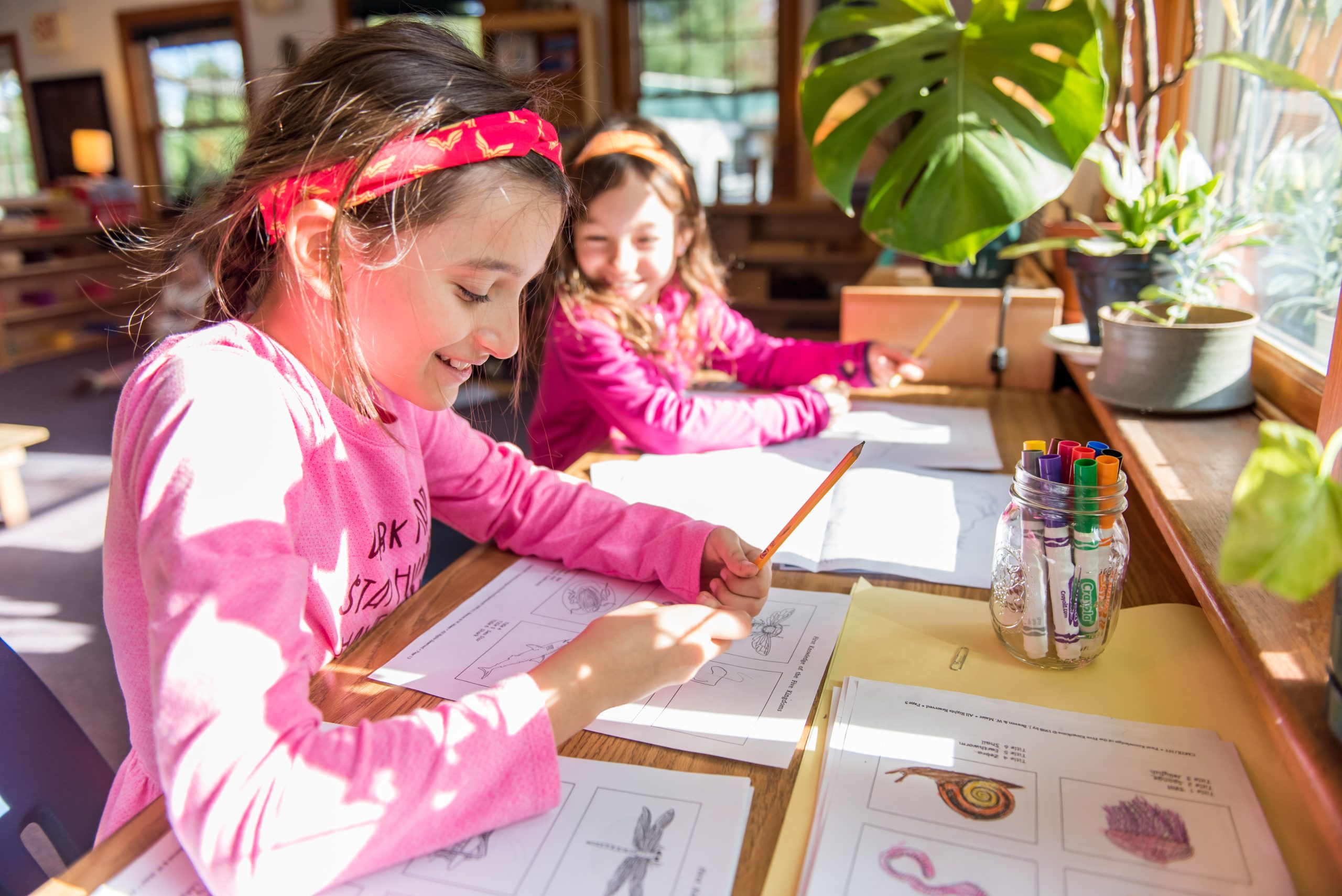
Children are shown how to classify animals and plants as a way to put into a structured order the world around them. These studies encourage an ecological way of life and a feeling of responsibility for the environment. Botany lessons include the parts of a plant, plant life cycles, how plants reproduce, the parts/shapes of leaves, soil analysis, gardening, and the parts and systems of trees and flowers. Zoology lessons include the five kingdoms, external parts and body functions of vertebrates, food chains, invertebrates, animal adaptations, and pond study.
Social Justice
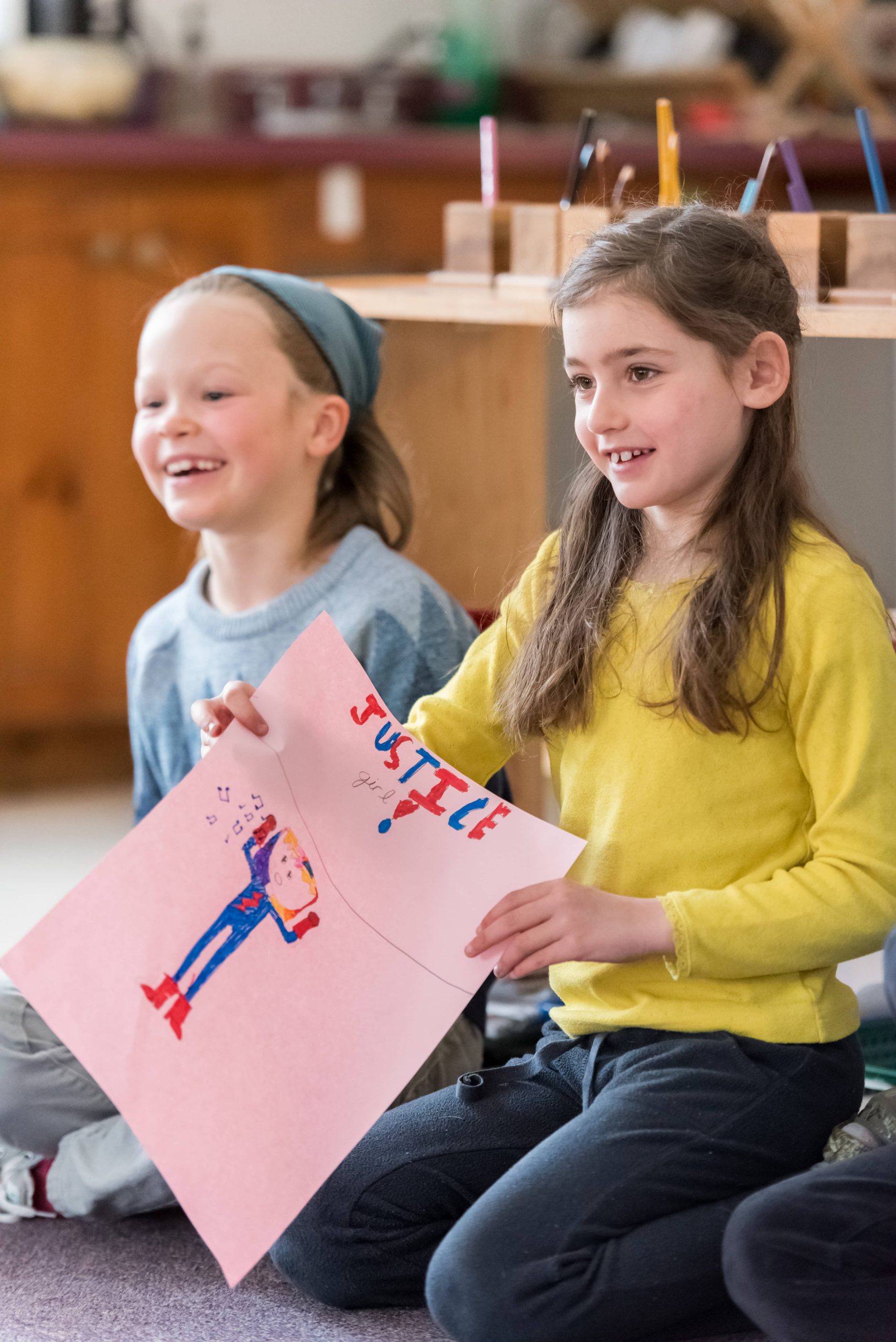
The concepts of acceptance, justice, and fairness are extremely important to children six- to nine- years old as they are trying to figure out how the world works and how people communicate and treat one another.
The topics of racism, economic justice, immigration, and gender bias are presented on a three-year cycle. We introduce a social justice vocabulary and define terms like race, racism, prejudice, privilege, discrimination, bias, stereotype, equality, poverty, and class.
We present a historical timeline so the children have a context with which to understand the topic, and we discuss how to create action plans with which to help affect change in the world.
Community Service-Learning Program
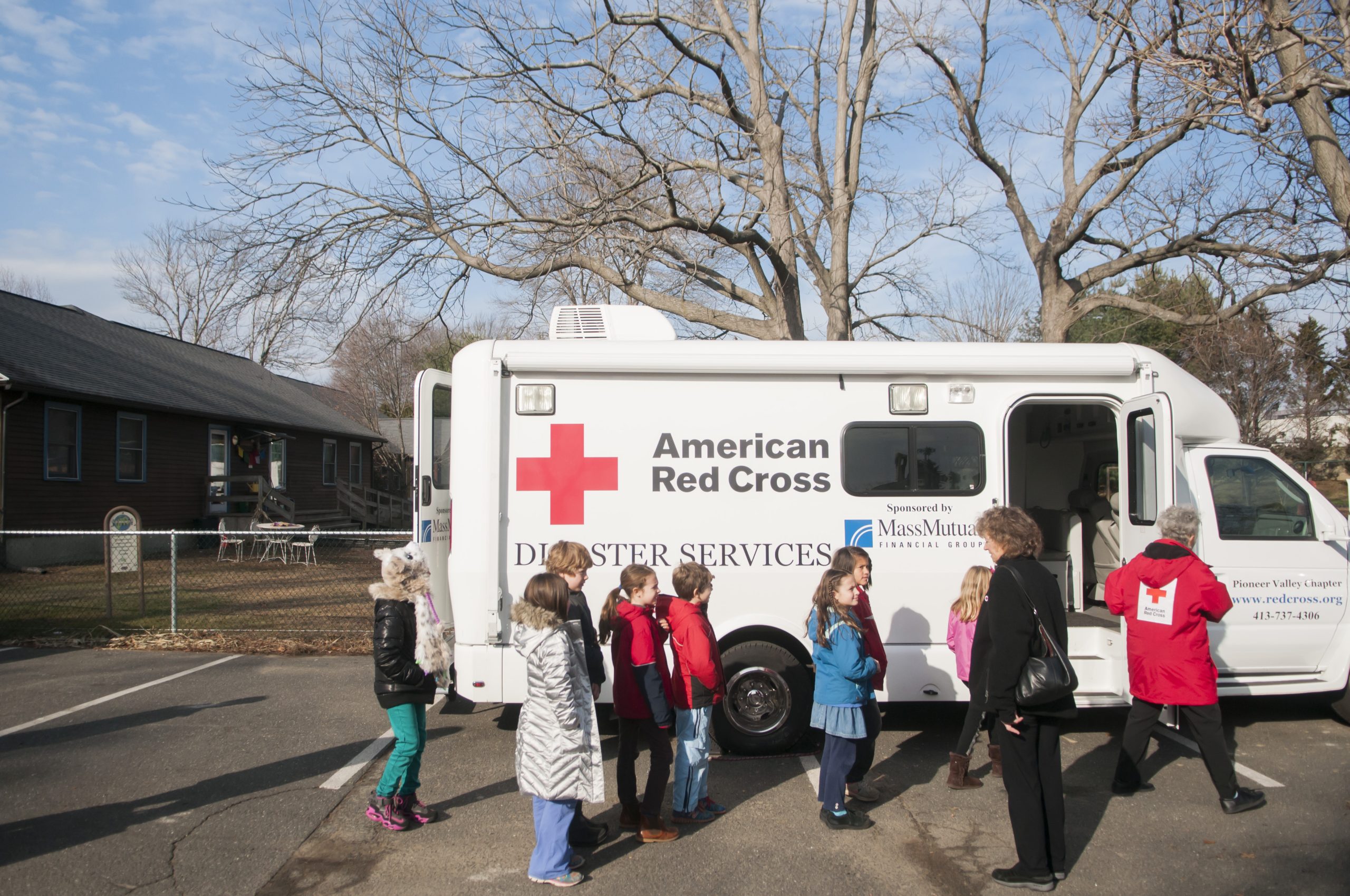
Through lessons, class discussions, books, speakers, and hands-on work, our Montessori elementary students are taught the importance of community service as a way to be a responsible member of the local, national, and global community.
Projects include assembling comfort care kits full of toiletries for the Red Cross, delivering handmade valentines to a local nursing home, collecting food for the Northampton Survival Center, and returning to the nursing home each May to recite poetry and sing for the residents.
Art, Music, Spanish, Outdoor Ed
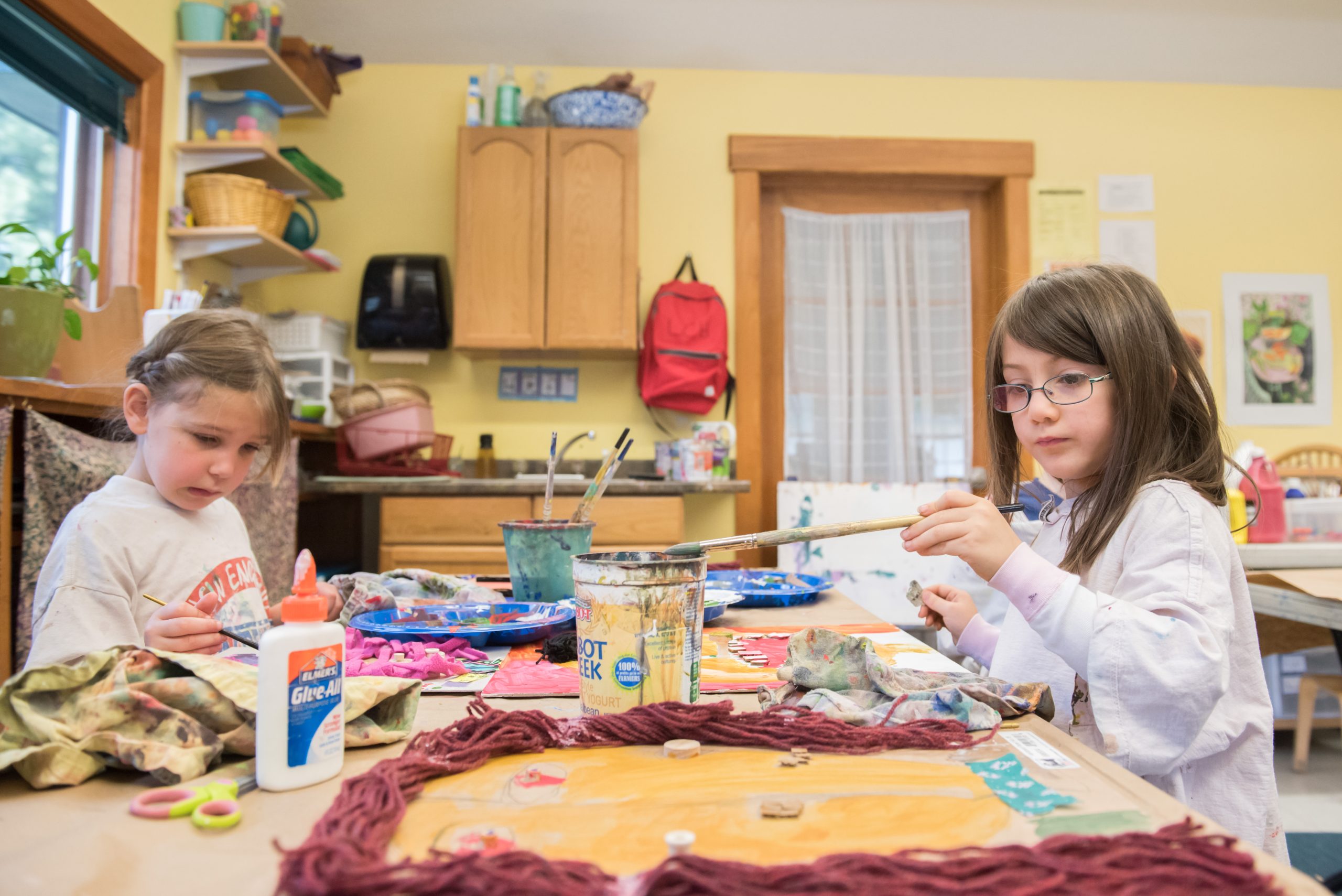
The Music program in Lower El develops melodic singing, listening skills, and the introduction of note reading. Students practice speaking and listening to Spanish within the context of drama, games, oral drills, and songs.
In Outdoor Enrichment, students practice team-building, problem-solving, and communication skills while learning about local ecology and environmental justice.
Special Events