Spanish
Connection to other cultures is a key part of the Montessori experience, and that connection really comes alive during Montessori Spanish lessons. Led by native speakers, the work grows with the students: toddlers hear Spanish through songs, stories, and play; Children’s House builds a strong base of vocabulary through repetition and listening; and by the time students reach elementary and middle school, they are engaging more intentionally with the language through immersion and practical conversation.
Across all levels, the focus starts with hearing the language. Through songs, read-alouds, puppet work, and teacher-student interaction, students get consistent exposure to authentic spoken Spanish, which helps them naturally pick up pronunciation, rhythm, and structure. From there, they begin to notice patterns and make sense of what they’re hearing: working on early literacy skills like sound recognition and blending, building simple sentences, and exploring how the language works. Tools like the Spanish dictionary are introduced to encourage independence when new words arise.
Music is also used in a more intentional way, breaking down song lyrics to uncover vocabulary, grammar, and cultural meaning. This often opens the door to broader conversations about the Spanish-speaking world, exploring history and traditions, so students begin to understand language within the context of the people and cultures who speak it.
The goal is to move from listening, to understanding, to using the language with purpose. Students grow in confidence as they take risks and engage with Spanish in ways that feel natural and meaningful, while also developing a deeper awareness of the cultures connected to the language.
Toddler
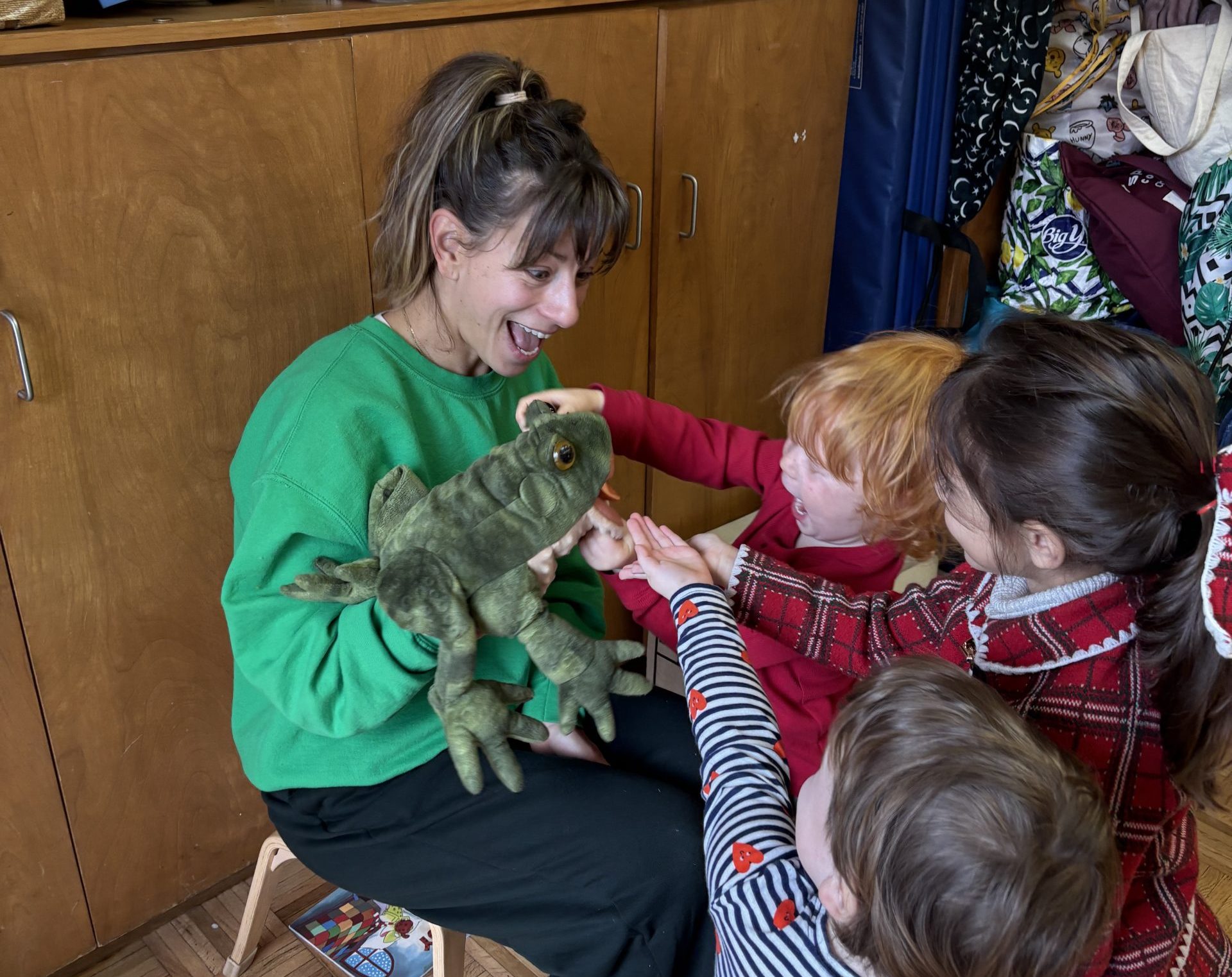
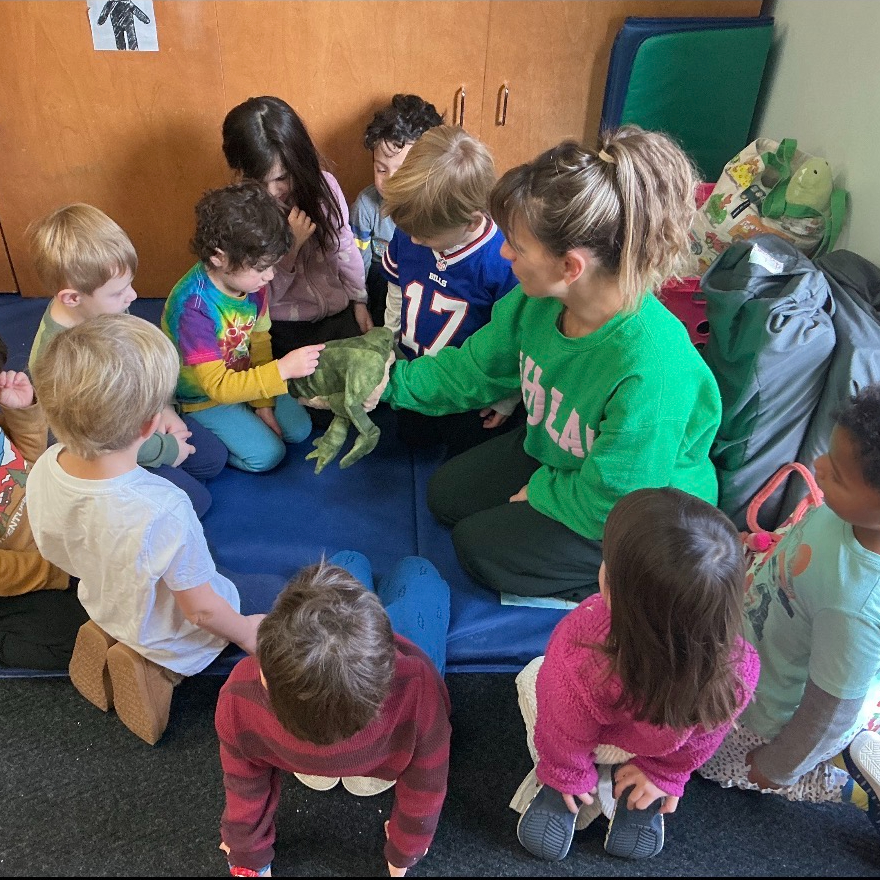
Puppets are especially effective with the younger groups. They shift the dynamic. Students who might hold back are much more willing to respond when it’s a puppet asking the question. It keeps things playful, which is important.
For example, over the winter I prepared lessons around a famous story: FROGGY GETS DRESSED (in Spanish “FROGGY SE VISTE”) – picture attached. I had a frog puppet and all of the clothing items inside a backpack, students had to look for the right clothing item and put it on — as I read the story, they got the frog dressed. It was a hit! Photo attached.
Children’s House
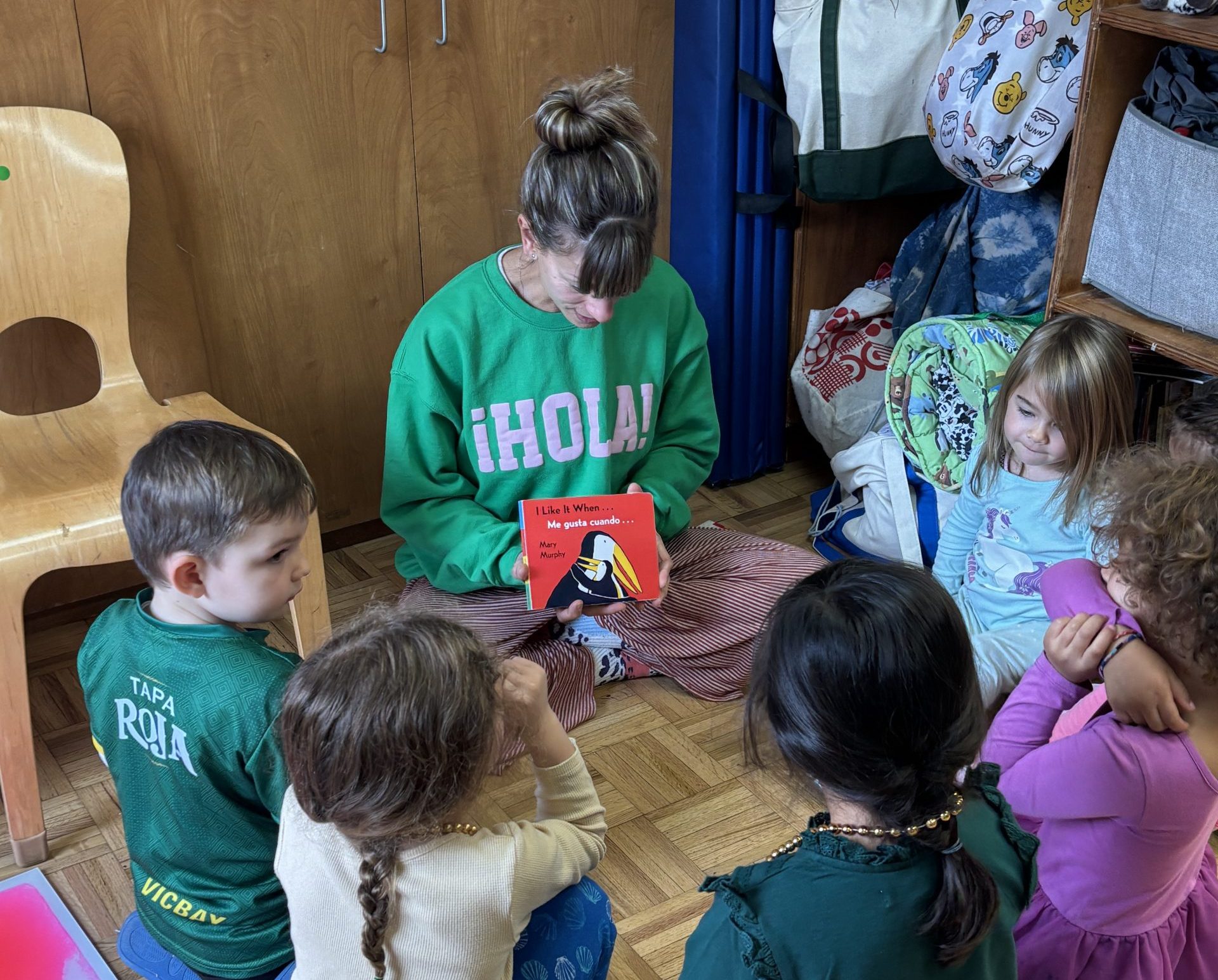
Children’s House builds a strong base of vocabulary through repetition and listening. Through songs, read-alouds, puppet work, and teacher-student interaction, students get consistent exposure to authentic spoken Spanish, which helps them naturally pick up pronunciation, rhythm, and structure.
From there, they begin to notice patterns and make sense of what they’re hearing: working on early literacy skills like sound recognition and blending, building simple sentences, and exploring how the language works. Music is also used in a more intentional way, breaking down song lyrics to uncover vocabulary, grammar, and cultural meaning.
Lower Elementary
The focus in Lower Elementary is building a strong foundation of listening comprehension, which is central for successful foreign language acquisition. Our classes emphasize activities that give students plenty of opportunities for auditory input: practicing confident Spanish introductions, enjoying puppet lessons, read-aloud stories and songs every class.
Regular exposure to authentic spoken language, modeled by a native speaker, helps students absorb pronunciation, rhythm, and structure, and it is great to see their interest and confidence grow.
Upper Elementary
After a brief review of essentials (números, colores, alphabet, greetings), Upper Elementary moves into early literacy work: recognizing vowels and consonants, blending sounds to make words, and beginning to work with sentence structure.
Students are encouraged to turn to the Spanish dictionary when they encounter new vocabulary. Building this habit now will serve them well as they become more independent learners. Listening practice continues through lyric decoding, using songs to help uncover vocabulary, grammar patterns, and some cultural context. Students have also started working with Spanish adjectives, including how they change for gender and number so they can describe things accurately.
Middle School
In middle school, the shift is toward using the language more deliberately. There’s more back-and-forth conversation, more expectation that students can express ideas, and more independence in working through unfamiliar language.
Students spend more time connecting language to culture and history in a way that’s a bit more developed like making an Argentinean cake or how to serve and drink Mate, a traditional South American herbal drink, most closely associated with Argentina and Uruguay. The cake, the mate, these are cultural symbols that help expand students’ awareness of and appreciation for other ways of living.